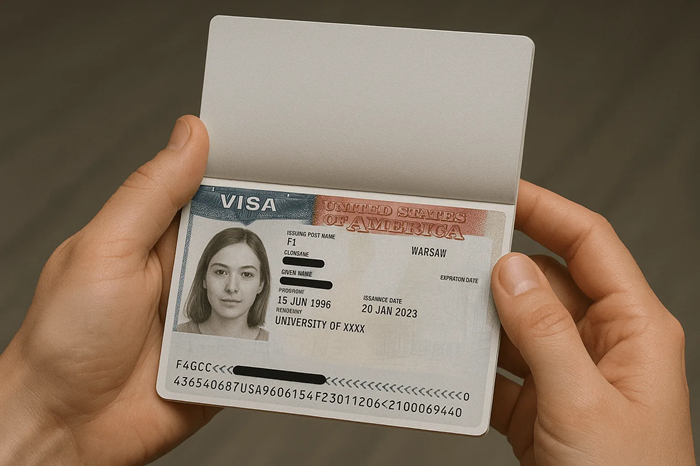
Studying at an American university begins long before the first bell rings – with a strictly regulated bureaucratic process. An F-1 student visa is issued exclusively to applicants who are officially accepted to an educational institution participating in the government’s monitoring system.
Rules for Obtaining
The Certificate of Eligibility for Nonimmigrant Status (Form I-20) is the foundation of your application. After the university submits this document, you register with the SEVIS system. At this stage, you must pay the I-901 fee. Without a unique payment confirmation number, the system simply won’t allow you to proceed to the next step.
Simultaneously, you complete the online DS-160 form. This lengthy questionnaire, written in English, requires every detail: from a list of countries visited in the past five years to your social media handles. Any lie or concealment of information will result in immediate denial under the statute of misleading a consular officer. After your application is frozen, you pay a non-refundable consular fee of $185.
The final and most psychologically challenging stage is the interview. Scheduling an interview can be a challenge in itself: depending on the embassy’s workload, availability can appear randomly, so you must monitor your calendar daily. At the visa section counter, the consular officer spends only two to three minutes assessing you. Their job is to screen out potential immigrants. To do this, the officer examines three critical aspects:
Financial solvency: can you or your sponsor afford your tuition without having to work illegally?
Academic intentions: how logical is your desire to study in the United States, rather than at home or in another country? Is the new course related to your previous education?
Ties to your home country: do you have property, a business, family, or career prospects in your home country that guarantee your return after graduation?
Only after these steps can your student visa be issued.
Practical advice
Preparing documents requires precision. In addition to the required passport and application forms, gather evidence of your trustworthiness. You’ll need bank statements, school or university transcripts, original diplomas, and recent TOEFL or IELTS certificates.
The consulate must see that your savings cover not only the first year of study but also accommodation, flights, and health insurance. If a sponsor is paying, you’ll need documentation proving their income and your family relationship.